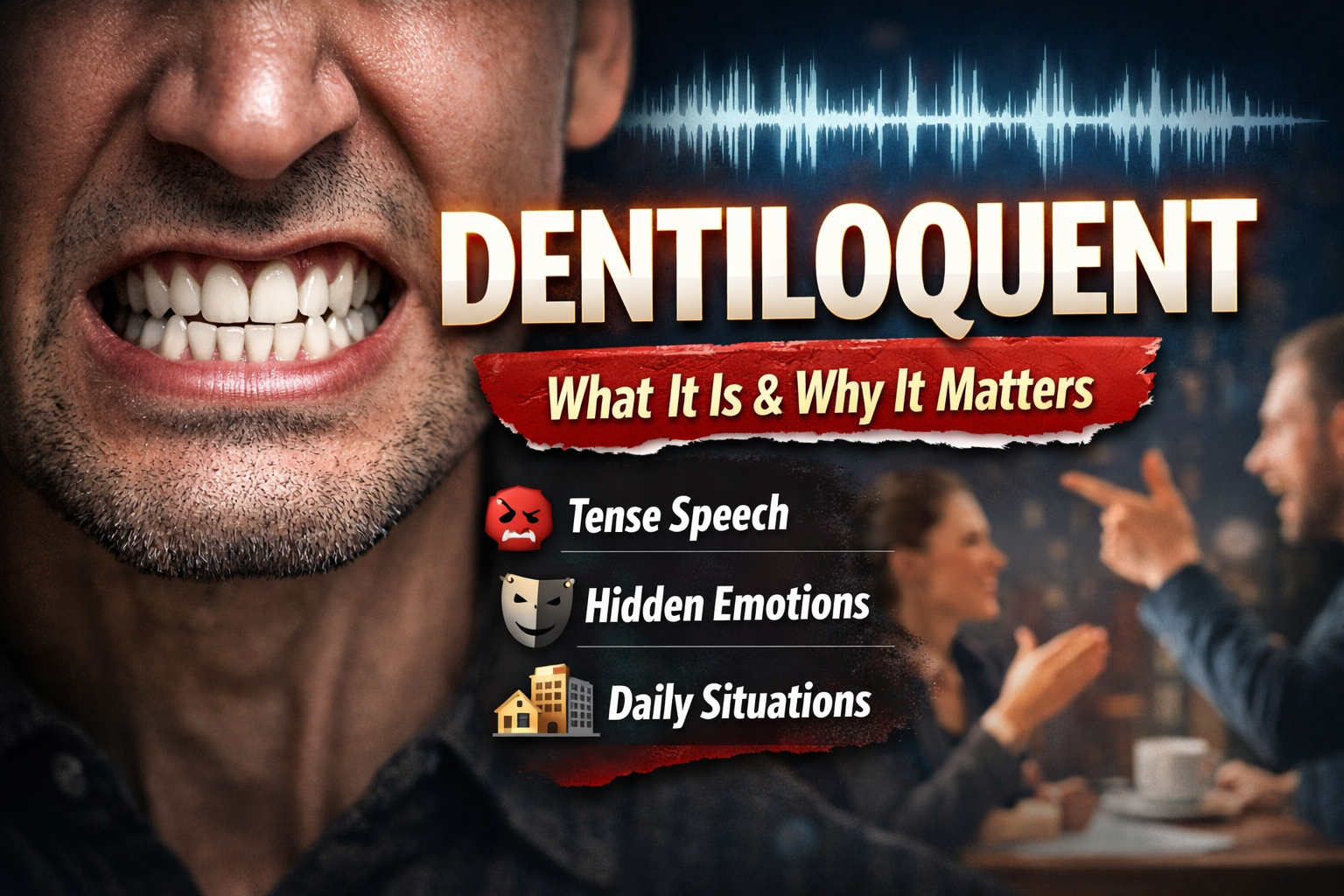
Dentiloquent: Meaning, Uses, and Why It Matters in Everyday Communication
Language is full of rare and interesting words, and dentiloquent is one of them. At first, it may sound complex, but its idea is simple and easy to relate to. This term describes a way of speaking that feels tight or controlled, often shaped by emotion. You may notice it when someone talks while feeling stressed or upset. In daily life, people show this pattern without realizing it. Learning about dentiloquent communication helps you understand tone, behavior, and hidden feelings. This guide explains its meaning, real-life use, and how it connects to better communication skills.
What Does Dentiloquent Mean?
Dentiloquent refers to a speaking style where words are delivered through tight or clenched teeth. This often makes speech sound restricted or tense. It is usually linked with strong emotions like anger or nervousness. When someone speaks this way, their tone may feel sharp or forced. Even though the word is uncommon, the behavior is very familiar. Many people use this speaking style during difficult moments. Understanding this concept helps you notice emotional signals in conversations and respond more thoughtfully in different situations.
The Origin of the Word
The term dentiloquent comes from Latin roots. “Denti” relates to teeth, while “loquent” means speaking. Together, they describe speech formed through the teeth. This origin makes the meaning easy to understand and remember. Though the word is not widely used in casual talk, it appears in advanced vocabulary and writing. Knowing its background adds depth to your language skills and helps you connect words with their original meaning.
When This Speaking Style Appears
This type of speech often appears under emotional pressure. People may speak this way when they feel angry, but try to stay calm. It can also happen during stress or uncomfortable situations. In workplaces, someone might use a tight tone when feeling defensive. In personal life, it may show up during arguments. Most of the time, it happens without conscious effort. Recognizing this pattern allows you to better understand the emotions behind words and handle conversations with more awareness.
Everyday Examples
You may notice this speech pattern in daily life more often than expected. For example, a person replying in a short, tight tone during a disagreement shows this behavior. Another example is someone speaking carefully while hiding frustration. These moments are easy to miss if you only focus on words. Paying attention to tone and delivery reveals deeper meaning. This awareness improves how you interpret conversations and react to others in real situations.
Difference from Normal Speech
Natural speech feels relaxed and smooth. Words flow easily without tension. In contrast, this style feels stiff and controlled. The difference is clear in tone and expression. Relaxed communication creates comfort and clarity, while tight delivery can confuse. People may misread it as rude or distant. That is why it is important to notice how tone affects meaning. Small changes in delivery can completely shift how a message is understood.
Emotional Signals Behind It
This speaking pattern often reflects strong emotions. It can show anger, stress, fear, or frustration. Sometimes, people use it to hold back stronger reactions. Instead of raising their voice, they tighten their tone. This creates a controlled but tense sound. Understanding these signals helps you respond with patience instead of reacting quickly. It also improves emotional intelligence, which is key in both personal and professional relationships.
Use in Writing and Storytelling
Writers often describe characters using this type of speech to show emotion. Instead of directly stating feelings, they describe how words are spoken. This makes scenes more vivid and realistic. It allows readers to imagine the tension in a conversation. Using such descriptions adds depth to storytelling. It also helps writers create stronger emotional connections with readers by showing rather than telling.
How to Improve Your Speaking Style
If you notice tension in your speech, there are simple ways to improve. Start by relaxing your jaw and taking slow breaths. This reduces pressure in your voice. Speaking at a steady pace also helps. Pausing before replying can prevent a tight tone. Over time, these habits create a more natural speaking style. Clear and calm communication makes conversations smoother and more effective.
Why This Concept Matters
Understanding speech patterns like dentiloquent improves how you communicate. It helps you read emotions beyond words. You become more aware of your tone and delivery. This leads to better conversations and fewer misunderstandings. In professional settings, it improves clarity and confidence. In personal life, it strengthens relationships. Small awareness can create a big impact on how you connect with others.
Real-Life Scenario
Imagine a manager giving feedback while feeling upset. Their words sound controlled but tense. This reflects inner frustration. Another example is a friend responding briefly during an argument. Their tone feels tight and distant. These situations show how tone reveals hidden emotion. Recognizing such patterns helps you respond calmly and avoid unnecessary conflict. It builds a better understanding of everyday communication.
Communication and Personal Growth
Good communication is more than just words. It includes tone, expression, and emotional awareness. When you improve these areas, your overall communication becomes stronger. Reducing tension in speech helps you sound more confident and clear. This builds trust in both personal and professional interactions. Over time, it leads to better relationships and stronger connections with people around you.
Conclusion
Dentiloquent may be a rare word, but the behavior it describes is very common. It reflects how emotions shape the way we speak. By understanding this concept, you become more aware of tone and communication patterns. This awareness helps you improve conversations and avoid misunderstandings. With small changes, you can move toward a more relaxed and confident speaking style. Paying attention to how words are delivered can make a big difference in everyday life.
FAQs
1. What does dentiloquent mean?
It describes speaking in a tight or controlled way, often shaped by emotion.
2. Is this speaking style common?
Yes, many people use it during stress or emotional situations.
3. Why do people speak this way?
It often happens when someone feels tense, angry, or nervous.
4. Does it affect communication?
Yes, it can make speech sound unclear or uncomfortable.
5. How can I improve my tone?
Relax your jaw, breathe slowly, and speak at a steady pace.
6. Is it used in writing?
Yes, writers use it to show emotion through dialogue.
READ MORE: Ingredients in Wullkozvelex (2025 Update): Benefits, Safety, and Label Guide